

Freelancing has become a practical way for skilled professionals to find clients, complete projects, and build independent careers. With the right platform, freelancers can discover opportunities across writing, graphic design, programming, digital marketing, video editing, translation, virtual assistance, and many other fields.
The Best Freelancing Apps make freelance work easier by bringing clients and professionals together through mobile-friendly platforms. Freelancers can create profiles, search projects, submit proposals, communicate with clients, track assignments, and manage payments from smartphones or computers.
What Are Freelancing Apps?
Freelancing apps are online platforms that connect independent professionals with clients looking for specific services. A freelancer can create a professional profile, showcase skills, browse available projects, and communicate with potential clients without needing a traditional office or employer.
These platforms support different types of freelance work, including technology, creative services, business support, writing, marketing, and administrative tasks. Some platforms focus on project-based work, while others allow freelancers to offer predefined services that clients can purchase directly.
Why Use the Best Freelancing Apps?
The Best Freelancing Apps can provide convenient access to remote opportunities from almost anywhere. Instead of relying entirely on personal contacts or local businesses, freelancers can use digital marketplaces to discover clients from different regions and industries.
Another benefit is flexibility. Freelancers can search for projects based on their skills, experience, availability, and preferred workload. Mobile apps also make it easier to respond to messages, review project updates, and stay connected with clients while away from a computer.
Upwork
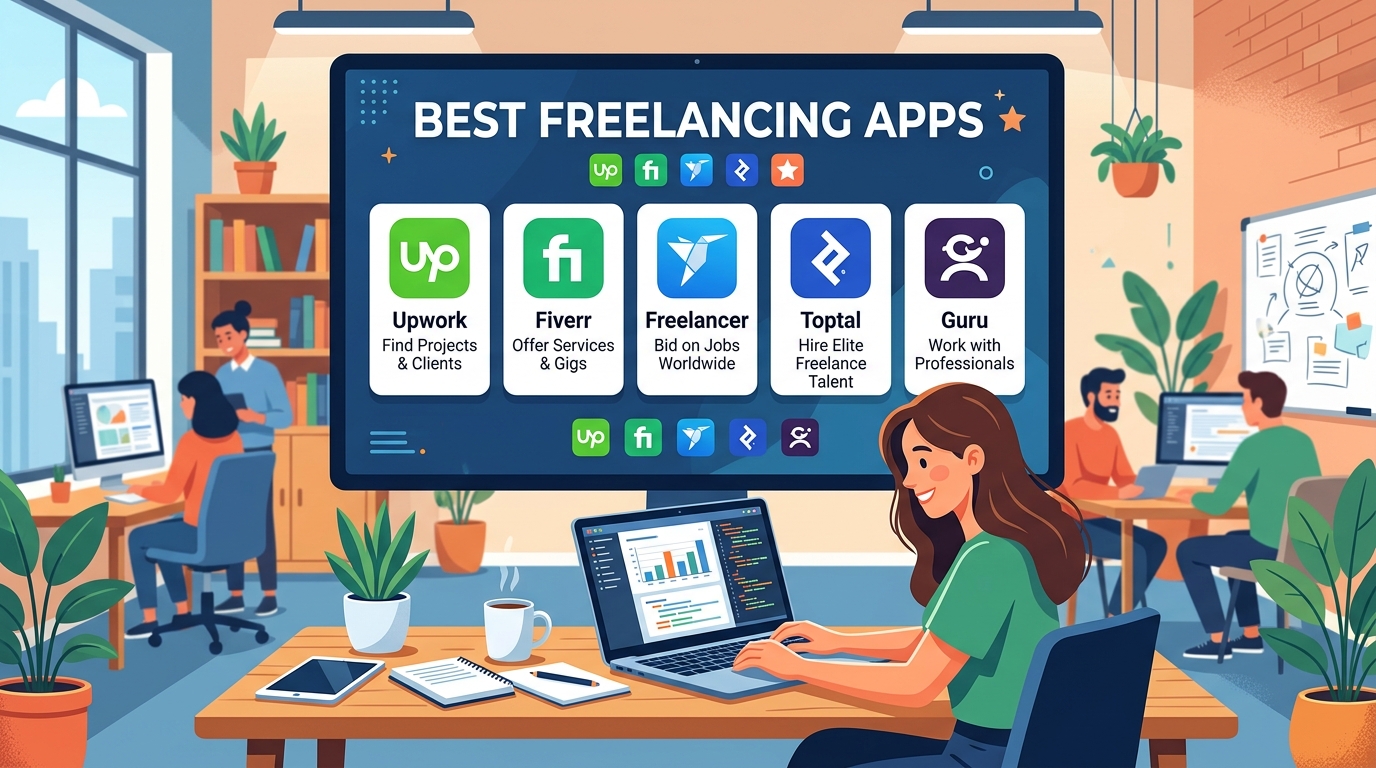
Upwork is one of the most recognized freelance marketplaces, offering opportunities across technology, writing, design, marketing, customer support, finance, and business services. Freelancers can create detailed profiles and apply for projects that match their skills.
The platform uses proposals for many project listings, allowing freelancers to introduce their experience and explain how they can help a client. Its mobile experience can also help professionals monitor messages, proposals, contracts, and project activity while working remotely.
Fiverr
Fiverr uses a service-based model where freelancers can create listings describing the services they provide. These listings can cover areas such as logo design, content writing, video editing, programming, voice-over work, and digital marketing.
Fiverr can be useful for freelancers who prefer packaging their services into clear offerings. A well-written service description, relevant portfolio examples, accurate pricing, and professional communication can help potential clients understand what a freelancer provides.
Freelancer
Freelancer.com provides a marketplace where businesses can post projects and independent professionals can submit proposals. Its categories cover a wide range of services, including software development, design, writing, data entry, engineering, and marketing.
Freelancers can use the platform to search projects that match their expertise and communicate with clients through the marketplace. Building a complete profile and maintaining strong work quality can help establish credibility when competing for project opportunities.
PeoplePerHour
PeoplePerHour connects businesses with independent professionals offering services in areas such as design, writing, marketing, programming, video production, and business support. The platform supports both project-based work and packaged service offerings.
PeoplePerHour can be useful for professionals who want to present specialized services to potential clients. A focused profile, relevant portfolio, clear communication, and realistic project expectations can make the freelancing process more organized.
Toptal
Toptal follows a selective approach to connecting businesses with freelance professionals. The platform is known for opportunities involving experienced developers, designers, finance professionals, project managers, and other specialists.
Because of its selective model, Toptal is generally more suitable for professionals with substantial experience and strong technical or professional skills. Freelancers considering the platform should be prepared for its screening process and expectations around professional expertise.
Guru
Guru provides freelance opportunities across several professional categories. Freelancers can build profiles, display portfolios, search jobs, submit quotes, and communicate with clients through the platform.
The platform can suit professionals who want another marketplace for discovering remote projects. As with other freelance platforms, freelancers should focus on creating a clear profile that explains their capabilities, experience, service areas, and previous work.
Contra
Contra focuses on independent professionals and creative or digital work. Freelancers can create profiles and showcase projects to demonstrate their abilities to potential clients.
Contra can be particularly relevant for professionals who want their portfolio to play an important role in attracting opportunities. Presenting strong project examples can help clients understand the quality and type of work a freelancer can deliver.
LinkedIn is not a traditional freelance marketplace, but it can be valuable for discovering freelance opportunities and connecting directly with businesses. Professionals can showcase their experience, publish work, and communicate with potential clients.
LinkedIn works especially well when freelancers combine networking with a strong professional profile. Sharing useful industry content, maintaining an updated portfolio, and clearly describing available services can increase visibility among potential clients.
Best Freelancing Apps for Beginners
Beginners often need platforms that make it relatively simple to create a profile, display skills, and search for entry-level projects. Service marketplaces can be useful because they allow new freelancers to define specific services instead of presenting themselves as experts in every category.
A beginner should start with skills they can demonstrate confidently. Writing samples, design projects, sample websites, edited videos, spreadsheets, or other portfolio pieces can provide evidence of ability even when professional experience is limited.
Best Freelancing Apps for Writers
Writers can find freelance opportunities involving blog posts, website content, product descriptions, newsletters, technical documentation, copywriting, editing, and proofreading. Platforms with broad project categories can provide opportunities for both general and specialized writers.
A professional writing profile should clearly identify the type of content the freelancer produces. A portfolio containing several strong samples can be more useful than listing a large number of skills without supporting examples.
Best Freelancing Apps for Designers
Graphic designers can use freelancing platforms to find projects involving logos, social media graphics, presentations, advertisements, websites, illustrations, and branding materials. Visual portfolios are especially important because clients often evaluate design quality before starting a conversation.
Designers should organize their portfolio around their strongest work and preferred services. Clear project descriptions can also explain the design objective, creative process, software used, and final result without making the portfolio unnecessarily complicated.
Best Freelancing Apps for Developers
Developers can find freelance projects involving websites, mobile applications, software development, APIs, databases, automation, testing, and technical maintenance. Some platforms also offer specialized opportunities for experienced developers working with particular programming languages.
A developer’s profile should identify relevant technologies and project experience clearly. Demonstrating completed projects through a portfolio, code samples, or detailed case studies can help clients understand technical capabilities.
Best Freelancing Apps for Digital Marketers
Digital marketers can offer services involving search engine optimization, social media management, content marketing, email campaigns, advertising, analytics, and strategy. Businesses often use freelancers when they need specialized marketing assistance without hiring a full-time employee.
Marketing freelancers should explain the specific services they provide rather than using broad descriptions. Portfolio examples, campaign experience, measurable project outcomes, and knowledge of relevant tools can make a profile more informative for prospective clients.
Best Freelancing Apps for Students
Students with useful digital skills can explore freelance work that fits around their education. Writing, graphic design, video editing, presentation design, data organization, programming, and virtual assistance are examples of services that can sometimes be performed with flexible schedules.
Students should prioritize realistic workloads and avoid accepting projects that interfere with school responsibilities. Starting with smaller assignments can provide experience while allowing a new freelancer to understand communication, deadlines, revisions, and client expectations.
How to Choose the Best Freelancing Apps
Choosing among the Best Freelancing Apps depends on the type of service, experience level, preferred project model, and target clients. A platform specializing in professional talent may suit an experienced specialist, while a broad marketplace may provide more varied opportunities.
Before committing to a platform, review its service categories, freelancer requirements, payment structure, project process, communication tools, and account policies. Understanding these details can help freelancers select platforms that fit their professional goals.
Create a Professional Freelancing Profile
A strong profile should quickly communicate who you are, what you do, and how your services can help clients. Use a clear professional introduction and focus on skills that directly relate to the services you want to provide.
Avoid filling the profile with unrelated skills simply to make it appear larger. Clients usually benefit more from a focused profile that explains relevant expertise, experience, services, portfolio examples, and professional strengths.
Build a Strong Freelance Portfolio
A portfolio gives potential clients practical evidence of your abilities. New freelancers can create sample projects based on realistic business requirements when they do not yet have enough client work to display.
Organize portfolio pieces by service or skill and include short explanations where useful. Instead of uploading a large collection of average examples, focus on work that represents the type and quality of projects you want to receive.
Read Also: Freelancing Apps 2026: Best Apps for Finding Remote Work and Growing Your Career
Write Better Freelance Proposals
A proposal should address the client’s actual project instead of relying entirely on a generic introduction. Start by showing that you understand the requirements, then explain the relevant skills or experience you can bring to the assignment.
Keep proposals professional and easy to read. Avoid making unrealistic promises or copying the same message for every project. A customized response that addresses specific requirements can communicate greater attention to the client’s needs.
How to Get Your First Freelance Client
Getting the first client can take time because new profiles often lack reviews and completed projects. Beginners can improve their chances by targeting projects that match their current skills and by presenting relevant portfolio examples.
Professional communication is also important during the early stage. Respond clearly, understand the requirements before accepting a project, confirm deadlines, and maintain consistent communication throughout the assignment.
How to Build a Strong Freelance Reputation
A freelancer’s reputation develops through the quality of completed work and professional interactions with clients. Meeting agreed deadlines, following project requirements, and communicating clearly can contribute to positive client experiences.
Freelancers should also learn from completed projects. Reviewing client feedback can reveal areas for improvement in communication, technical execution, organization, or project management and can help strengthen future work.
Managing Freelance Projects
Project management becomes increasingly important as a freelancer handles multiple assignments. Keep project requirements, deadlines, deliverables, revisions, and communication organized so that important details are not overlooked.
Freelancers can use calendars, task-management systems, spreadsheets, or platform features to track their workload. Separating projects into smaller tasks can also make complex assignments easier to manage and complete on schedule.
Freelancing Apps and Mobile Work
Mobile access allows freelancers to manage many aspects of independent work without staying at a desktop computer. Depending on the platform, users may be able to review opportunities, communicate with clients, monitor projects, and receive notifications through a mobile app.
However, smartphones are not always ideal for every freelance task. Writing long documents, designing complex graphics, programming, editing large videos, or managing detailed spreadsheets may require a computer with appropriate software.
Freelancing Skills That Are in Demand
Freelance demand changes as businesses adopt new technologies and digital workflows. Common freelance categories include software development, web design, content creation, graphic design, digital marketing, video editing, virtual assistance, data-related services, and business support.
Developing one strong core skill can provide a better foundation than trying to learn many unrelated skills simultaneously. Freelancers can later add complementary skills that improve the value of their primary service.
Freelancing Apps for Remote Work
Remote freelancing allows professionals to work with clients without sharing the same physical location. Digital platforms provide tools that can support communication, project management, file sharing, proposals, contracts, and other parts of the freelance process.
Remote work also requires personal organization. Freelancers need reliable communication, appropriate equipment, a suitable workspace, and a realistic understanding of how much work they can complete within a particular period.
Avoiding Freelance Scams
Freelancers should carefully evaluate unfamiliar clients and projects before accepting work. Requests for sensitive account information, unusual payment arrangements, or work that appears unrelated to the stated project can be warning signs that require caution.
Keep important project communication and transactions within the platform when possible and review the platform’s policies before starting unfamiliar work. Never provide passwords, security codes, or other sensitive account credentials to a client.
Freelancing Payments and Fees
Different platforms use different payment systems, service fees, withdrawal methods, and policies. Freelancers should understand the applicable costs before accepting projects so they can accurately evaluate the amount they will receive.
Payment timing can also vary according to the platform, contract type, client process, and withdrawal method. Reading current platform terms before beginning freelance work can help prevent misunderstandings.
How to Grow a Freelance Career
Freelancing can develop from occasional projects into a more structured professional career. As experience increases, freelancers can specialize in profitable skills, improve portfolios, build professional relationships, and develop systems for handling recurring work.
Long-term growth also depends on continuous learning. Technology, software, client expectations, and digital business practices change over time, so freelancers who regularly improve their skills can adapt more effectively to new project requirements.
Common Mistakes New Freelancers Make
One common mistake is accepting projects without fully understanding the requirements. A freelancer should review the scope, deadline, deliverables, revisions, and communication expectations before agreeing to begin work.
Another mistake is creating an overly broad profile. Presenting dozens of unrelated services can make it difficult for clients to understand a freelancer’s main expertise. A focused profile can make professional positioning clearer.
Tips for Success With Freelancing Apps
Choose platforms that match your skills and professional goals instead of creating accounts everywhere without a clear strategy. Build a strong profile, publish relevant portfolio work, and apply selectively to projects that match your capabilities.
Consistency is also important. Freelancing success usually develops through repeated professional actions rather than one project. Continue improving your skills, communication, portfolio, proposal quality, and project-management habits as you gain experience.
Frequently Asked Questions
What are the Best Freelancing Apps for beginners?
Platforms such as Fiverr, Upwork, Freelancer.com, and Guru can provide different ways for beginners to explore freelance opportunities. Beginners should compare their project models and choose services that match demonstrable skills.
Which freelancing app is best for students?
Students can explore platforms offering flexible freelance projects that fit their available time and skills. Writing, design, programming, editing, and virtual assistance can be possible starting categories depending on individual abilities.
Can I freelance using a smartphone?
Yes, many freelancing platforms provide mobile access for communication, project monitoring, and opportunity discovery. However, certain professional tasks may still require a computer and specialized software.
What skills can I sell on freelancing apps?
Common services include writing, graphic design, programming, video editing, digital marketing, translation, virtual assistance, web development, data services, and presentation design.
How can I get my first freelance project?
Create a focused profile, prepare relevant portfolio samples, understand project requirements, and submit customized proposals. Start with projects that realistically match your current skills and experience.
Are freelancing apps free?
Some platforms allow users to create profiles without an upfront subscription, while fees can apply to services, transactions, memberships, or other platform features. Always check the current pricing and fee structure before using a platform.
How do freelancers find clients?
Freelancers can find clients through marketplaces, professional networking platforms, referrals, personal websites, and direct business outreach. A strong portfolio and clear service description can support client acquisition.
Is freelancing good for remote work?
Freelancing can support remote work because many projects can be completed digitally. The suitability depends on the service, client requirements, equipment, communication needs, and freelancer’s working environment.
How important is a freelance portfolio?
A portfolio can be very important because it gives potential clients evidence of practical ability. Strong, relevant examples can make a freelancer’s services easier to understand.
How can I become successful with freelancing apps?
Focus on one or more marketable skills, maintain a professional profile, create quality portfolio samples, communicate clearly, meet agreed deadlines, and continue improving your expertise. Consistency can help build experience and long-term professional relationships.
Conclusion
The Best Freelancing Apps can help independent professionals discover remote projects, connect with clients, promote services, and manage freelance work digitally. Platforms such as Upwork, Fiverr, Freelancer.com, PeoplePerHour, Toptal, Guru, Contra, and LinkedIn serve different types of professionals and work models.
The right platform depends on individual skills, experience, service type, project preferences, and professional goals. Instead of relying only on the popularity of an app, evaluate its available opportunities, platform policies, fees, project structure, and suitability for your particular freelance service.

1 Comment
Pingback: Freelancing for Students: A Complete Guide to Starting Online Work- LionAPK