

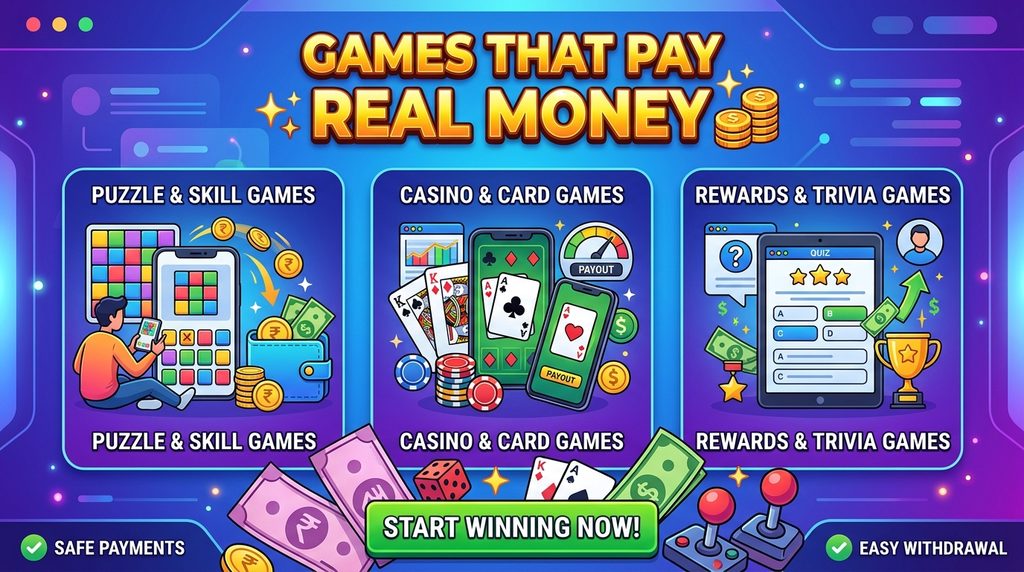
Gaming has evolved from simple entertainment into a large digital industry offering new ways for players to earn rewards. Games That Pay Real Money are attracting attention because some platforms provide cash rewards, gift cards, tournament prizes, or other benefits based on gameplay, competitions, achievements, and creative contributions.
However, not every game promising money is trustworthy or suitable for every player. Understanding how reward systems work, identifying legitimate opportunities, protecting personal information, and avoiding gambling-based platforms are essential steps for anyone exploring money-making games.
What Are Games That Pay Real Money?
Games That Pay Real Money are digital games or gaming platforms that offer rewards with real-world value. Depending on the platform, rewards can come from skill competitions, verified tournaments, achievement systems, promotional events, esports activities, or gaming-related creative work.
The earning model differs from one platform to another, meaning players should understand the rules before participating. Some opportunities reward performance, while others provide points that can later be exchanged for eligible rewards such as gift cards or other approved benefits.
How Do Money-Making Games Work?
Reward-based games generally use a points, achievement, competition, or tournament system. Players complete eligible activities, reach milestones, participate in skill-based events, or contribute content, after which the platform may provide rewards according to its terms.
The amount a player can receive depends on the game, region, eligibility requirements, competition structure, and available reward system. A legitimate platform should clearly explain how rewards are calculated and should not make unrealistic promises about guaranteed income.
Skill-Based Games and Rewards
Skill-based gaming can provide opportunities for players who enjoy strategy, puzzles, knowledge challenges, sports simulations, or competitive gameplay. Rewards may depend on performance rather than simply spending money or relying on random outcomes.
Players should carefully check whether a competition requires an entry payment or involves wagering. Games involving real-money stakes can introduce financial and gambling-related risks, so younger players should avoid participating in real-money wagering activities and focus on free-to-play competitions or age-appropriate reward systems.
Gaming Tournaments
Gaming tournaments are another established way players can potentially receive prizes. Competitive events can involve popular multiplayer games, strategy titles, sports games, racing games, or other competitive formats.
Tournament rules vary significantly, and prizes may depend on rankings, team performance, sponsorships, or event-specific conditions. Players should use official tournament information and avoid anyone requesting unusual payments, passwords, verification codes, or private account information.
Esports and Competitive Gaming
Esports has created professional opportunities for highly skilled players through tournaments, teams, sponsorships, streaming, coaching, and content creation. Competitive gaming can therefore become part of a broader career path rather than simply a method of earning small rewards.
Building a career in esports usually requires consistent practice, teamwork, communication, game knowledge, and responsible time management. Prize money is also highly competitive, so players should treat esports as a skill-based activity rather than expecting guaranteed income.
Reward Games Without Deposits
Some reward platforms use free activities rather than requiring players to deposit money. These systems may provide points for completing specific in-game objectives, participating in promotional activities, or reaching eligible milestones.
Free reward systems can reduce financial risk because players are not required to put personal funds into gameplay. Even so, users should read the terms carefully because reward availability, withdrawal conditions, minimum thresholds, regional restrictions, and age requirements can differ between platforms.
Games That Offer Gift Card Rewards
Gift cards are another common reward format used by gaming and entertainment platforms. Instead of sending cash directly, a platform may allow eligible users to exchange accumulated points for gift cards from supported retailers or digital services.
Gift-card rewards can be useful for users who prefer digital purchases instead of cash payments. Before spending time on a reward platform, check the supported countries, available gift-card options, redemption threshold, expiration rules, and other conditions.
Mobile Games With Reward Systems
Mobile gaming has expanded rapidly, and some games include reward programs based on achievements, events, competitions, or promotional campaigns. These systems can provide digital rewards without requiring players to treat gaming as an income source.
Users should pay attention to permissions, advertisements, privacy policies, and account requirements before installing a new game. A game should not require unnecessary access to sensitive information, and players should download applications through trusted official app stores whenever possible.
Browser Games and Online Rewards
Browser-based games can provide accessible entertainment without requiring a large installation. Some legitimate platforms use points, competitions, or promotional rewards to encourage continued participation.
Because browser games can be hosted on many different websites, users should verify the platform before creating an account. Secure connections, clear privacy policies, transparent terms, and reputable ownership are useful indicators when evaluating an unfamiliar website.
Puzzle Games With Rewards
Puzzle games can combine entertainment with achievement-based reward systems. Word puzzles, logic challenges, trivia activities, and similar games may reward users for completing tasks or achieving specific results.
The value of rewards varies considerably, and many platforms offer modest incentives rather than meaningful income. Players should therefore view these games as entertainment with potential rewards instead of depending on them as a primary source of money.
Trivia Games and Knowledge Competitions
Trivia games test knowledge across subjects such as history, science, sports, entertainment, geography, and general information. Some platforms organize free competitions where eligible participants can compete for prizes.
A trustworthy competition should clearly explain its rules, scoring method, eligibility requirements, and prize conditions. Players should also avoid platforms that pressure them to make payments or provide sensitive information simply to access a supposedly guaranteed reward.
Games That Pay Real Money Through Tournaments
Tournament-based gaming can create reward opportunities for players who develop strong skills in a particular title. Competitions may use rankings, elimination rounds, timed challenges, or team-based formats to determine winners.
Free-entry tournaments are generally more appropriate for younger players than events involving financial stakes. Always check the minimum age, regional eligibility, tournament rules, and prize requirements before entering any competitive event.
Can Games Really Provide Real Earnings?
Some gaming-related activities can provide genuine rewards, but earning potential should not be confused with guaranteed income. Most casual reward systems provide limited benefits, while professional opportunities such as esports, streaming, game development, and content creation require substantial skill and long-term effort.
A realistic approach is to treat gaming rewards as an occasional benefit rather than a dependable salary. Anyone promising large guaranteed earnings from simple gameplay should be viewed cautiously, especially when the platform asks for money upfront.
How to Identify Legitimate Gaming Opportunities
A legitimate gaming opportunity should provide understandable information about its company, rules, rewards, eligibility requirements, and privacy practices. Clear terms help users determine what they are actually receiving before spending time or sharing account information.
Warning signs include guaranteed high earnings, pressure to deposit money, requests for passwords, suspicious downloads, fake testimonials, hidden fees, and claims that rewards are effortless. Researching the platform independently can help users recognize unreliable opportunities before creating an account.
Avoid Games Based on Gambling
Some games may appear to be ordinary entertainment while incorporating betting, wagering, random cash outcomes, or other gambling mechanics. These activities can create financial risks and may have age restrictions that make them inappropriate for younger users.
Players should avoid real-money gambling and games designed around wagering. Free-to-play skill games, creative gaming activities, educational challenges, and legitimate competitions are safer alternatives when the goal is to enjoy gaming without putting money at risk.
Protecting Your Personal Information
Gaming platforms may request account information, usernames, email addresses, or other details for legitimate reasons. Players should still provide only the information necessary for the service and avoid sharing passwords, security codes, or private account credentials.
Strong, unique passwords and privacy-conscious account settings can improve digital security. Players should also be cautious with links received through chats, social media, gaming communities, or unsolicited messages because scammers may use fake rewards to collect account information.
Avoiding Gaming Scams
Gaming scams often use attractive claims such as instant cash, huge prizes, exclusive rewards, or guaranteed earnings. These promises can encourage users to click suspicious links, download unsafe applications, or provide private information.
A safer approach is to verify the official website or application before interacting with a reward offer. Never send money simply because someone claims it is necessary to unlock a prize, and do not trust messages demanding urgent action.
Understanding Minimum Withdrawal Requirements
Reward platforms may require users to collect a certain number of points before requesting a reward. This threshold can vary depending on the platform, reward type, location, and payment method.
Before investing significant time, check the withdrawal requirements and available redemption methods. Understanding these details early can prevent disappointment when a platform offers rewards that are difficult to redeem.
Reading Terms and Conditions
Terms and conditions explain how a gaming platform operates and what users can expect from its reward program. Important sections may cover eligibility, age restrictions, regional availability, reward limits, account verification, and withdrawal rules.
Although terms can be lengthy, reviewing the relevant sections can reveal important limitations. A professional reward platform should not hide essential conditions behind misleading advertisements or unclear instructions.
Managing Gaming Time
Games can be enjoyable, but reward systems may encourage players to spend longer periods completing tasks. Setting reasonable gaming limits helps maintain a healthy balance between entertainment, education, sleep, family responsibilities, and other activities.
Earning rewards should never become a reason to ignore important responsibilities. Players can establish a fixed gaming schedule and take regular breaks, especially during long competitive sessions.
Are Games That Pay Real Money a Reliable Income Source?
For most players, reward games should not be considered a reliable income source. Small rewards can occasionally provide value, but consistent income generally requires professional skills, employment, entrepreneurship, content creation, or another established activity.
Gaming can still support long-term opportunities when players develop valuable skills. Communication, video editing, programming, graphic design, game development, competitive strategy, and content creation can turn gaming interests into broader digital skills.
Read Also: Paid Survey Apps: Complete Guide to Earning Money Online
Game Streaming as an Earning Opportunity
Streaming allows players to share gameplay, commentary, tutorials, challenges, and entertainment with an audience. Successful creators may eventually earn through platform programs, sponsorships, memberships, advertisements, or other legitimate creator opportunities.
Building an audience takes time and does not guarantee income. Younger creators should also understand platform age requirements, privacy settings, parental involvement where appropriate, and the importance of avoiding the public sharing of private information.
Gaming Content Creation
Gaming content includes tutorials, reviews, strategy guides, news coverage, educational videos, screenshots, livestreams, and creative posts. Content creators can develop audiences by providing useful information rather than relying solely on promises of quick earnings.
Quality, originality, consistency, and responsible publishing matter more than simply producing a large quantity of content. Creators should also respect copyright rules and avoid copying another creator’s work without permission.
Game Development and Long-Term Opportunities
Learning game development can create opportunities that extend beyond playing games. Beginners can explore programming, level design, animation, sound design, user-interface design, testing, storytelling, and other areas involved in creating digital games.
These skills can eventually support portfolios, educational projects, freelance work, or professional careers. For someone interested in earning from gaming over the long term, learning how games are made can be more valuable than chasing small reward programs.
Choosing Games Based on Skill and Interest
The best gaming opportunity depends on a player’s interests, abilities, available time, and goals. Someone who enjoys puzzles may prefer knowledge challenges, while a competitive player may enjoy free tournaments or structured esports practice.
Choosing games based on personal interest can make the experience more sustainable. Players should avoid selecting a game solely because an advertisement claims that it provides easy money, particularly when the claim sounds unrealistic.
Benefits of Reward-Based Gaming
Reward-based gaming can provide additional motivation to complete challenges and develop skills. Players may enjoy the satisfaction of achieving milestones while receiving modest rewards for eligible activities.
Another benefit is the opportunity to explore different forms of digital entertainment. However, rewards should remain secondary to safe and enjoyable gameplay, rather than becoming the only reason to participate.
Common Mistakes Players Should Avoid
One common mistake is believing that every game advertising cash rewards is legitimate. Another is spending personal money to chase a reward, especially when the platform does not provide clear information about how the system works.
Players should also avoid downloading applications from unknown sources, sharing account credentials, ignoring age requirements, or trusting unsolicited prize messages. Taking a few minutes to verify a platform can prevent many avoidable problems.
Best Practices for Safe Gaming Rewards
Start with free, reputable gaming opportunities and read the platform rules before participating. Never assume that an attractive advertisement accurately represents the actual reward system, and avoid services that pressure users to make financial commitments.
Protect your account, limit personal information, follow age requirements, and keep gaming balanced with other activities. If a reward system feels confusing, overly aggressive, or unrealistic, leaving the platform is usually the safest decision.
Future of Games That Pay Real Money
The gaming industry continues to expand through mobile gaming, esports, digital communities, creator platforms, virtual experiences, and interactive entertainment. Reward systems may continue evolving as developers search for new ways to engage players.
Future opportunities are likely to include more emphasis on skills, creativity, competitive performance, and digital content. Players who develop transferable abilities can benefit more from these changes than users who focus exclusively on quick reward schemes.
Frequently Asked Questions
What are Games That Pay Real Money?
Games That Pay Real Money are gaming platforms or activities that may provide rewards with real-world value. These rewards can include prizes, gift cards, tournament winnings, or other benefits depending on the platform’s rules.
Can games really provide cash rewards?
Some legitimate gaming activities can provide real-world rewards, but earnings are not guaranteed. Reward amounts, eligibility, competition requirements, and availability depend on the specific platform and region.
Are money-making games safe?
Safety depends on the platform and its reward model. Players should choose reputable services, protect personal information, read the rules, and avoid games involving gambling, wagering, suspicious payments, or unrealistic earning promises.
Do reward games require an investment?
Not necessarily. Some platforms offer free activities or competitions, while others may have paid features or entry requirements. Players should avoid putting money into gaming activities to chase rewards.
Can younger players participate in reward games?
Age requirements vary by platform and region. Younger players should use only age-appropriate services, follow platform rules, and avoid real-money wagering or gambling activities.
What types of games can offer rewards?
Puzzle challenges, trivia competitions, free tournaments, esports events, promotional gaming activities, and creator-focused opportunities can offer different forms of rewards. Availability depends on the platform and location.
Are gaming rewards guaranteed?
No. Legitimate reward programs generally have specific conditions, eligibility rules, and limits. Claims promising guaranteed large earnings from simple gameplay should be treated with caution.
How can players avoid gaming scams?
Players can reduce risk by checking official sources, avoiding suspicious links, protecting passwords, refusing unexpected payment requests, and researching unfamiliar platforms before using them.
Can gaming become a career?
Yes, gaming-related careers can include esports, streaming, game development, video production, coaching, design, programming, and content creation. These paths usually require significant skill development and consistent effort.
What is the safest way to explore gaming rewards?
The safest approach is to choose free, reputable, age-appropriate gaming activities and treat rewards as an extra benefit rather than guaranteed income. Avoid gambling, wagering, suspicious applications, and platforms requesting unnecessary personal information.
Conclusion
Games That Pay Real Money can include legitimate reward programs, free competitions, tournaments, esports opportunities, and gaming-related creative activities. However, the earning potential varies widely, and no legitimate platform should be treated as a guaranteed source of income.
The safest approach is to prioritize free and age-appropriate gaming, understand reward conditions, protect personal information, and avoid gambling or wagering activities. Gaming can be more valuable when it combines entertainment with skill development, creativity, competition, and responsible digital habits.

1 Comment
Pingback: Gaming Earning Apps: A Complete Guide to Earning Through Mobile Games - LionAPK